
Published 23/04/2026
7-10 Minute Read
In this blog, our MD, Lee Ali, sits down with Marketing Manager Phoebe to reflect on his EuroShop experience and share his key insights into exhibiting success. We’re also featuring additional perspectives from Han Leenhouts, the lead at Sales & Pepper, an event performance agency based in The Hague.
Both Lee and Han attended EuroShop not just as visitors but as speakers, with first-hand insights into what drives meaningful engagement on the show floor. Continue reading to uncover their strategies for exhibition success and learn how you can make every conversation count at your next exhibition.
Introduction to EuroShop: What was it like on the show floor?
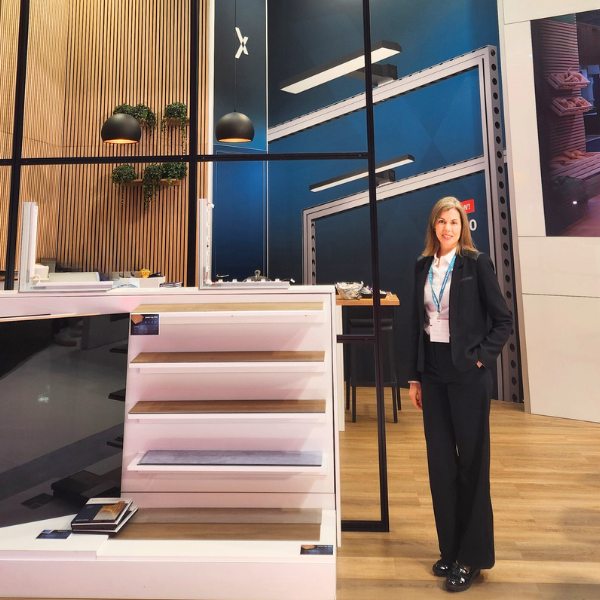
EuroShop is held in Düsseldorf every 3 years and is the world’s leading retail trade fair, bringing together global brands, designers and innovators focused on retail environments, experiential technology and customer engagement.
Lee and Han attended over several days fully immersing themselves in the different areas of the show. From exploring the show floor, attending networking experiences, delivering sessions on the IFES Yellow Stage and connecting with other events industry leaders.
Why does EuroShop still matter in 2026?
Because what retailers are doing today, designing immersive, customer-centric experiences, is exactly what exhibitors are striving to achieve on the show floor. EuroShop gives us a glimpse into the future of experience design, the evolution of the Attendee Journey and where exhibitors are still falling short in delivering meaningful engagement.
– Lee
What were the biggest exhibition trends at EuroShop this year?
The biggest trend I noticed was that there was no single dominant trend. Yes, there was plenty of technology. AI talk was everywhere. You saw moving graphics, digital layers, immersive concepts, and lots of visual spectacle. But for me, the strongest takeaway was actually much simpler: exhibitions are still incredibly relevant. For all the noise around digital transformation, the real value still comes from people meeting people. That is the part that has not changed. Technology can support the experience, enhance the message, and improve the environment. But it does not replace the quality of a real conversation, a real encounter, or a real business relationship starting on the show floor. So if I had to sum it up in one line, it would be this: the tools are evolving, but the power of exhibitions is still human.
– Han
Were there any negative exhibitor habits you noticed this year?
There’s no doubt the tech and immersive experiences were impressive. But for me, many exhibitors still struggled with the basics. I walked onto one stand purely because the design caught my eye however the team didn’t know how to start a conversation. No flow, no direction. It’s a reminder that no amount of tech replaces getting the fundamentals right.
– Lee
Expo Stars Supporting Exhibitors at EuroShop
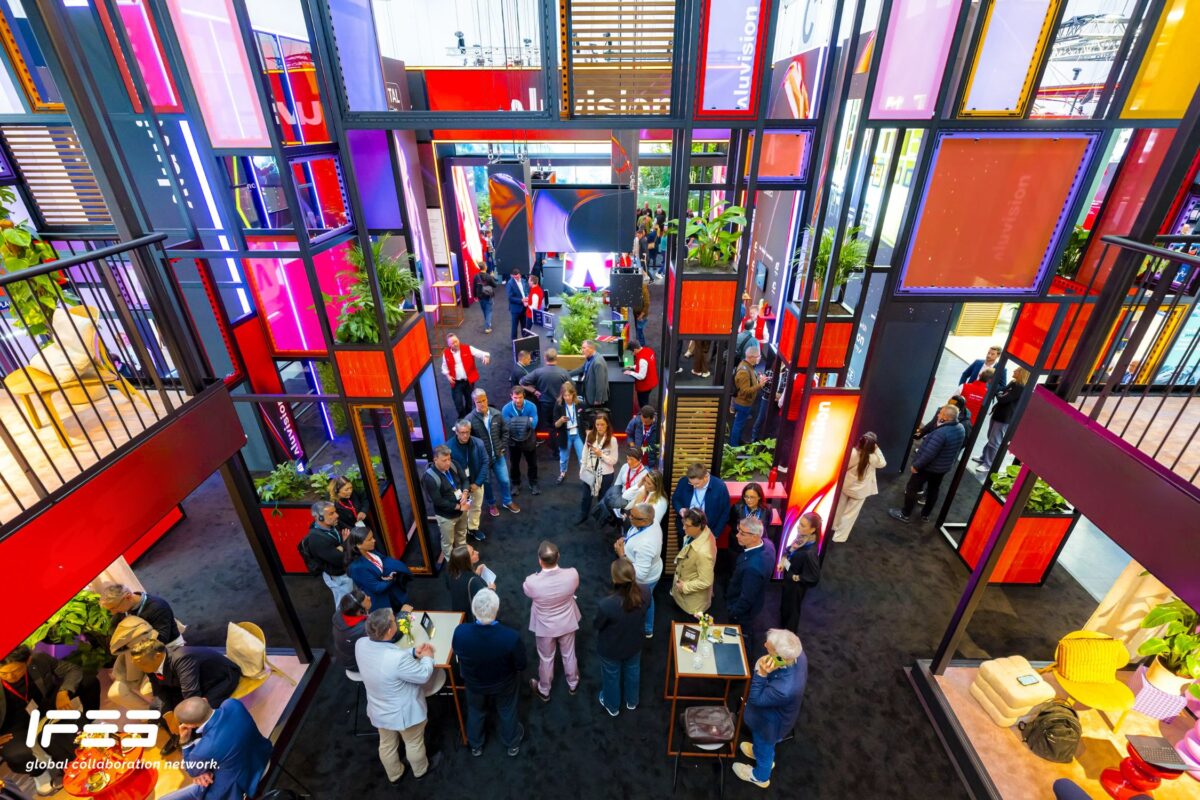
This year Expo Stars once again supported a number of Exhibitors through Professional Booth Staffing.
Lee, what makes Expo Stars Professional Booth Staffing different to other agencies?
One of the key aspects of using Expo Stars staff is that they are optimised for strategic engagement. as we provide training in our TEO Framework (Trade Show Engagement Optimisation). This means on the show floor they can proactively engage attendees, guide conversations in line with the attendee journey, support a range of booth staff roles and align interactions with key business objectives. In comparison to other agencies where staffing is unoptimised, in my opinion.
Can you tell us about what one member of staff got up to?
One of our Expo Stars supported an exhibitor as an Engager Which is the first point of human connection on the show floor. Their role is to proactively approach attendees, start conversations and guide them onto the stand. It’s a core role that reflects our values of engagement and connection throughout the attendee journey.
Find out more about our Professional Booth Staffing options by visiting
Booth Staffing | Services | Expo Stars
IFES Global Village
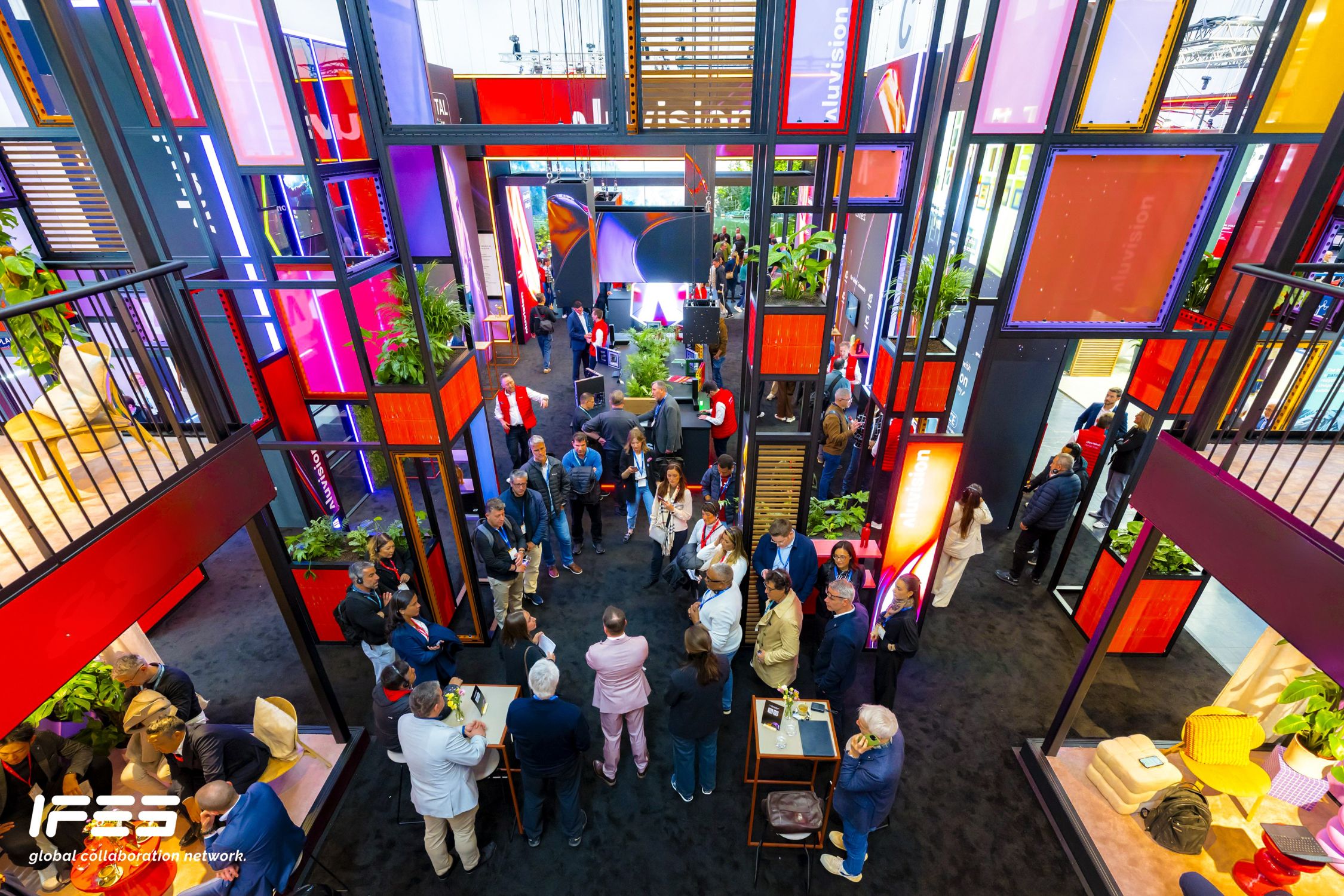
The IFES Global Village, created by the IFES Federation, is described as “the central international meeting point at EuroShop, where connections are made, collaborations begin, and the global exhibitions community comes together.”
Made up of IFES members working across the exhibition industry, the Global Village served as a focal point for connection, education and inspiration. With members representing diverse markets and specialisms, it brought together a wide range of perspectives, creating a vibrant hub of industry professionals. Across the event, 30 IFES members were exhibiting, with an additional 7,000–8,000 visitors passing through to connect. This resulted in members collectively generating over 3,500 valuable leads.
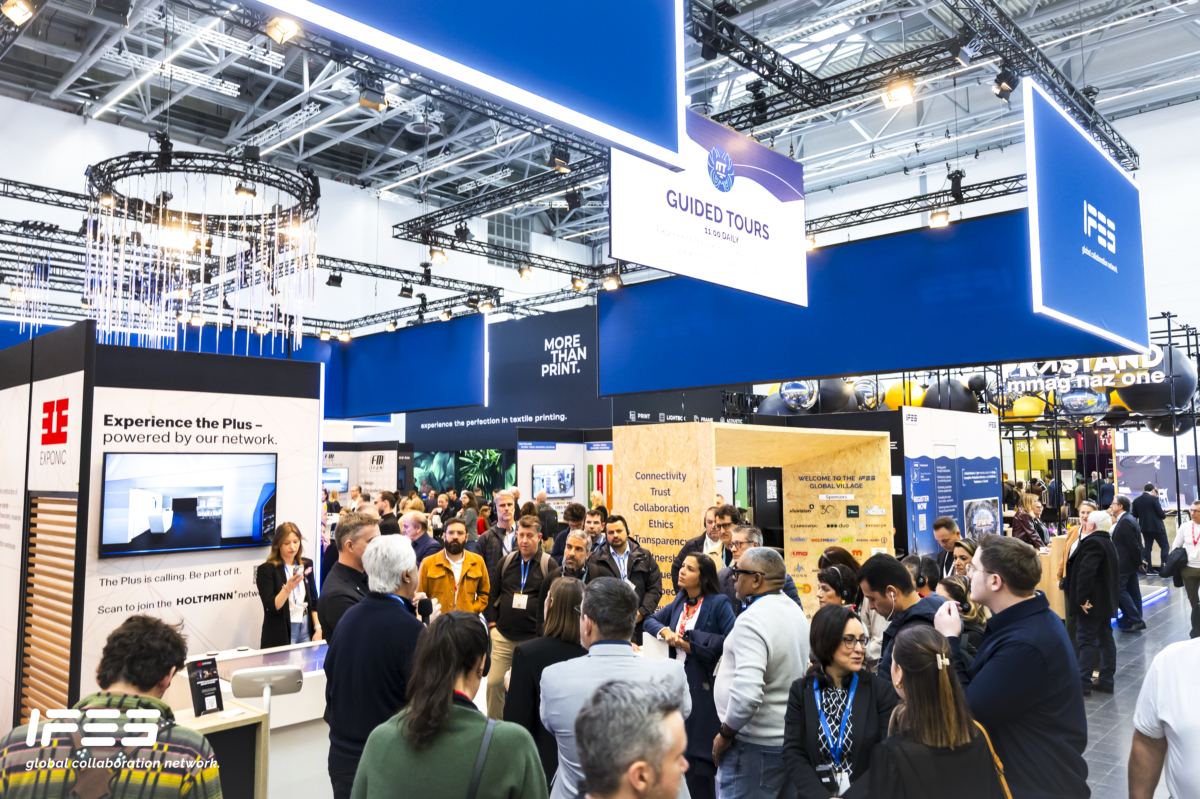
At the heart of the village was the IFES Yellow Stage, where a series of industry experts shared the latest insights and ideas shaping the future of exhibitions. It was here that both Lee and Hans delivered their sessions. Lee presenting “From Transactional to Transformational: Rethinking Trade Show Attendee Engagement”, and Hans delivering “Beyond the Algorithm: The Power of Human Connection in Live Events.”
Han, what did it mean to be in the IFES Village and be the main MC on the Yellow Stage?
It meant a lot. I was genuinely proud to be there. The IFES area had real international energy. You could feel it straight away. Conversations were happening everywhere, connections were being made, and you could sense the industry coming together in one space.
Being the main MC on stage was special because it brought together a few things I really enjoy: live interaction, strong content, energy in the room, and helping create an experience for other people. We had more than 50 speakers, so there was a constant flow of ideas and perspectives. My job was not just to introduce people. It was to keep the rhythm going, keep the atmosphere alive, and help turn that stage into something people wanted to be part of. That is work I genuinely love.
Lee, what was it like to be at the global IFES Village and what were the key insights from industry conversations?
It was great to connect with such a wide range of exhibition professionals at EuroShop. Speaking with organisers, stand builders and exhibitors, one theme kept coming up. The industry is evolving its environments faster than it is evolving its people. There’s a growing understanding that stand design, technology and footfall don’t automatically deliver engagement or ROI. Looking at this through our TEO Framework, it highlights a clear imbalance of more investment on attractions and design on the stand but less focus on what happens next: the conversation, the connection and the conversion.
What was encouraging is that many professionals are starting to recognise this. A common question I had was: how do we improve the quality of our conversations, not just the quantity of leads? That’s exactly the space we’ve been focused on at Expo Stars and something that i was really excited to discuss in further detail.
Han, what were the most valuable discussions you had with industry professionals?
The most valuable discussions were the ones about education, development, and action. I had great conversations with the Polish delegation about delivering a masterclass next year. I also spoke with American contacts about future education initiatives. That is important to me because training and speaking are the core of what I do. We also talked about our upcoming world tour, the topics that matter most right now, and where the biggest need for improvement is in the industry.
Those are the conversations I value most, because they move beyond nice ideas. They point toward practical next steps. For me, that is where real progress starts.
From Transactional to Transformational: Lee’s EuroShop Presentation
On Sunday 22nd February, Lee Ali took to the Yellow stage, part of the IFES Global Village at EuroShop, with a clear message.
We’ve upgraded our stands and technology — but not our conversations.
lEE ALI
His session, “From Transactional to Transformational,” explored how exhibitors can move beyond surface-level engagement and start creating conversations that actually convert. Continue reading to discover key insights from Lee’s presentation that you can use or download the slides here
Key Insights
The Core Problem
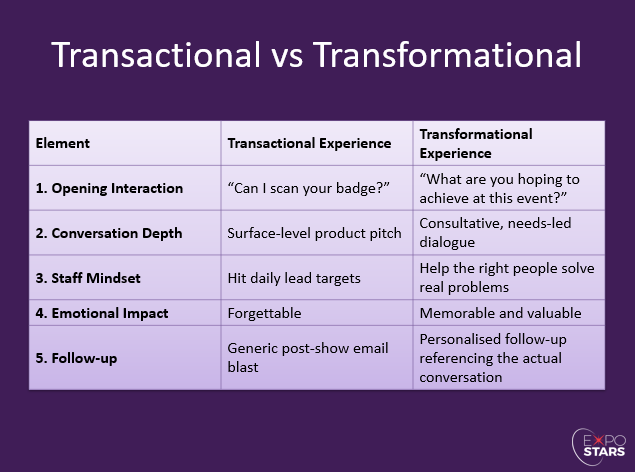
Many exhibition conversations lack depth and purpose.
- Too often they feel rushed and transactional
- Stands and technology have evolved but conversations haven’t
- This leads to missed opportunities, weak recall and low momentum
Why This Matters Now
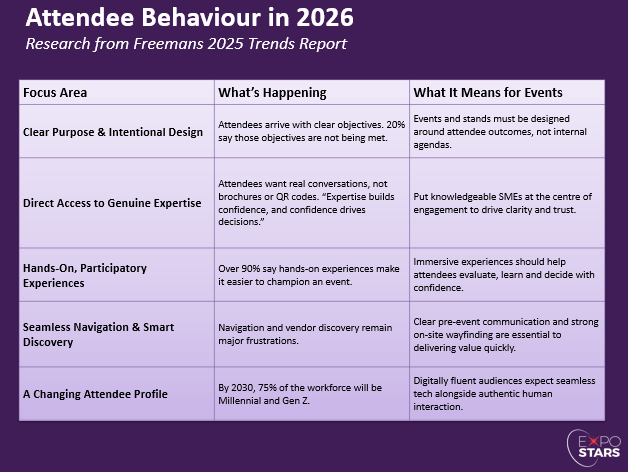
Attendee expectations are changing.
- Visitors expect value in exchange for their time
- They want meaningful discovery, relevant insights and genuine human connection
- Exhibitors must adapt to meet these expectations
The Shift Required
Exhibitors need to rethink their approach:
Stop designing stands. Start designing interactions.
LEE ALI
This shift is built on three key pillars:
- Purpose – clear intent and defined outcomes
- Personality – authenticity, confidence and presence
- Human Connection – empathy, listening and adaptability
How Engagement Actually Works
Engagement is not a moment. It’s a journey.
Before the show
- Audience clarity
- Intent-led outreach
On the stand
- Clear roles
- Structured conversation flow
- Strong first impressions (the “7-second window”)
After the show
- Fast follow-up
- Personalised communication
- Ongoing relationship building
What Drives Better Conversations
Small moments make a big difference:
- Eye contact
- Strong opening questions
- Active listening
- Storytelling
Measuring Success Differently
Success should not be based on volume alone.
Better conversations lead to:
- Stronger recall
- Higher conversion
- Improved ROI
The Big Takeaway
The industry faces a clear choice:
- Continue creating noise
- Or create meaningful, human-to-human connections that deliver real results
Transactional creates activity. Transformational creates impact.
LEE ALI
Closing Thoughts and Expectations for the Rest of 2026
What does designing interactions actually mean to make conversations convert on the show floor?
For me, designing interactions means applying intention to every stage of the conversation. Through the Expo Stars TEO Framework, that includes how attendees are approached, how conversations are opened, how common ground is built, how qualification is managed, and how next steps are agreed.
Ultimately, it’s about treating conversations as a designed process — not something left to chance. Just like a well-planned Booth Design, every stage should be considered and connected for an immersive brand experience.
– Lee
For me, designing interactions means designing what people actually do, not just what they see. A lot of exhibitors focus heavily on the stand, the graphics, the structure, the lighting. And all of that matters. But the bigger question is: what kind of behaviour does this environment create?
Does it invite people in? Does it make it easy to start a conversation? Does it trigger curiosity? Does it create involvement? Does it help your team connect naturally with the right visitors?
That is what designing interactions really means. You are not just designing a space. You are designing moments. Moments that make people stop, engage, and remember. The best stands are not only visually attractive. They are built for human connection.
– Han
In a year’s time, what developments do you think we will see on the show floor?
We will definitely see more technology. More dynamic content. More AI-supported communication. More immersive layers. That will continue.But what I hope we will see is something even more important: better use of the live moment.
Because in my view, many exhibitors are still only using half of the potential of a trade show. They show up, they look presentable, but they do not fully activate the opportunity.
So the development I would really like to see is better booth behaviour, stronger conversations, smarter follow-up, and more focus on making the exhibition floor perform as a business platform. Because when that happens, the show floor does not just become more impressive. It becomes more effective.
– Han
Ultimately, improving exhibition engagement comes down to one thing. The quality of your conversations. When those conversations genuinely connect with attendees, inspire new thinking and align your offering with their remit, that’s when real results start to happen.
Useful Resources
Professional Booth Staffing solutions
More about Lee Ali
Lee Ali is the Founder and Managing Director of Expo Stars Interactive Ltd, a global exhibition performance agency specialising in human-to-human engagement on the show floor. With over 18 years of experience across more than 3,000 events in 35+ countries, Lee helps exhibitors improve results through strategy, staffing, training and his Trade Show Engagement Optimisation (TEO) framework. A regular international speaker and host of The Expo Factor podcast, he is known for championing meaningful conversations as the key driver of exhibition ROI.
Get the latest updates about Lee
More about Han Leenhouts
Han Leenhouts is the founder of Sales & Pepper, an agency based in The Hague that helps exhibitors improve performance at trade shows and live events. With a background in international stand building, he has trained exhibition teams in 39 countries and specialises in helping companies build clear strategies, prepare their people and achieve better results on the show floor.
Get the latest updates about Han
FAQ
A high-quality conversation is one where both sides get something from it — the attendee finds value, and the exhibitor moves closer to their objective.
Through the TEO framework, it’s really about how that conversation flows. It starts with a natural, engaging opening, quickly finding common ground, and then moving into meaningful qualification. From there, it’s about listening properly, sharing relevant insight, and building enough trust to agree a clear next step.
It’s not about having more conversations.
It’s about having the right conversations — with purpose, direction, and a clear outcome.
In the exhibition and trade show environment, better conversations lead to better results.
You start to see higher-quality leads, stronger relationships, and clearer next steps coming out of every booth interaction.
And when that happens, everything improves. Higher conversion rates, shorter sales cycles and a stronger return on investment from your trade show activity.
Instead of focusing on surface-level exhibition metrics like footfall, badge scans or the number of conversations, the focus shifts to what really drives performance – meaningful attendee engagement and the outcomes those conversations create.
The most important trade show KPI’s are those that link your activity on the stand to real business outcomes. Many exhibitors focus on surface-level metrics like footfall, badge scans, or number of conversations. While these show activity, they don’t measure effectiveness.
Instead, you should focus on: Meaningful conversations, Qualified leads, Next steps agreed, meetings, demos, or follow-ups booked, Conversion rate and pipeline value. Simply If you’re only measuring badge scans, you’re not really measuring what matters.
References
Freeman. (2026). Freeman End-of-Year Trends Recap – Freeman. [online] Available at: https://www.freeman.com/resources/freeman-end-of-year-trends-recap/ [Accessed 16 Mar. 2026].